
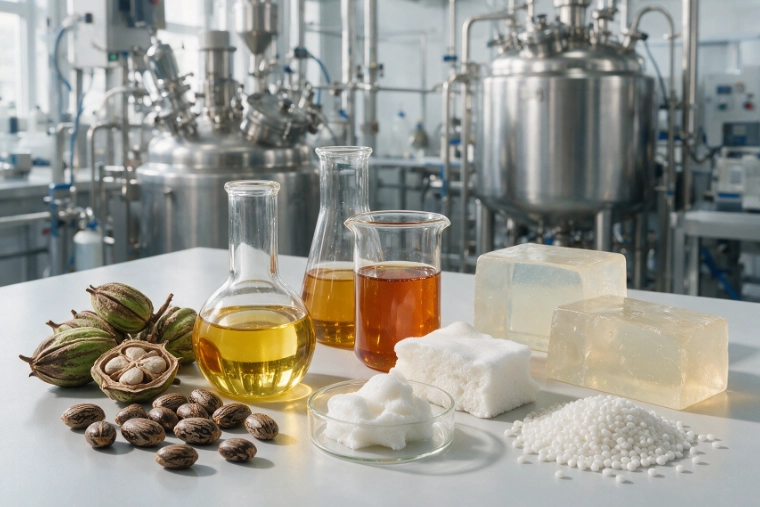
Introduction to Bio Polyols
The manufacturing sector is shifting towards renewable materials that can enhance sustainability without affecting product performance. Emerging as an alternative to traditional polyols, which are made of petroleum, bio-polyols are gaining attention as an alternative in polyurethane production.
Bio polyols continue to prove very useful with emerging applications in the automotive, construction, furniture and coatings industries, with the increased interest in technology use and sustainable formulations.
What Are Bio Polyols?
Bio polyols refer to polyol compounds derived partly or entirely out of renewable biological feedstocks, such as vegetable oils or farm feedstocks. Hydroxyl groups are found in them which react with isocyanates to form polyurethane materials.
Bio polyols can enable manufacturers to use renewable raw materials in their formulations as opposed to the traditional petroleum-based polyols. Their functioning is based on composition of chemicals, hydroxyl value, reactivity and viscosity.
Importance of Bio Polyols in Sustainable Manufacturing
Bio polyols can help in the process of switching to renewable sources of raw materials as they provide an alternative to traditional petrochemical ingredients. Their utilization can be used to assist manufacturers in diversification of the feedstock sources and towards targeted environmental goals. Their sustainability benefits, however, will be based on source, processing, transportation and overall product lifecycle considerations.
Emerging Trends in the Bio Polyols Industry
Innovations in the raw materials, technologies and industrial applications of bio polyols are evolving the bio polyols industry. A number of trends are shaping the way manufacturers are dealing with renewable polyurethane formulations.
Growth of Renewable Feedstocks
To manufacture bio polyols, manufacturers are looking into vegetable oils, agricultural by-products and other renewable resources. Examples of such feedstocks of the development of bio-based polymers include soybean oil, castor oil and sunflower oil.
Increased feedstock diversification can lead to the flexibility of a supply chain, and responsible sourcing is also significant to the attainment of any meaningful sustainability outcomes.
Advancements in Production Technology
Epoxidation, transesterification and other executions treat the renewable oils to functional polyols with the use of chemical processes. The technologies enable manufacturers to modify material properties to fit a particular application.
Ongoing research aims at enhancing production efficiency, consistency and conformity with existing polyurethane manufacturing systems.
Rising Demand for Sustainable Formulations
There is a gradual increase of industries considering which materials to use with renewable contents and still have it within the performance and regulatory standards. The bio polyols also offer the prospects to work out the formula with lower rates of ingredients of fossil origin.
Whether they will be taken up will be based on their price, quality of the product, technical performance and sustainability objectives of the manufacturers.
Industrial Applications of Bio-Polyols
The suitability of bio polyols in other industries is due to the fact that they have been used in the formulation of other polyurethane or have been experimented with.
- Automotive: Foam and interior applications where weight, comfort and durability are important.
- Construction: Insulation and other polyurethane-based building materials.
- Furniture: Flexible foam formulations for cushioning and upholstery.
- Coatings and adhesives: Applications requiring specific adhesion, flexibility and durability properties.
The right bio polyol will be based on the performance needs and makeup of the final product.
Challenges in Bio Polyol Adoption
Broadening use of bio polyols entails overcoming some technical and commercial hurdles. Manufacturers have to balance sustainability and production efficiency, issues of product quality and costs.
Feedstock Availability and Cost
The renewable feedstock can change in price due to other factors like the condition of agriculture, changes in the supply chain and alternative uses. Stability in terms of availability is appropriate to manufacturers who are seeking reliable production.
Performance and Compatibility
The bio polyols should exceed the desired technical characteristics of their use. The processing conditions, chemical composition or equipment may vary in some formulations.
Scalability and Commercial Adoption
Increasing production at the same quality and competitive prices is also still a point of consideration. Further research, enhancement of manufacturing processes and development of supply chain can assist in the expansion of industrial applications.
FAQ
Bio polyols will assist a manufacturer in adding renewable raw materials into a polyurethane base and decrease the use of fossil-based components.
The applications of polyurethane differ, and it depends on the chemical properties and requirements to be met in the case of foams, coatings, adhesives, sealants or elastomers.
The future of bio-polyols will depend on the production innovations, availability of renewable feedstock as well as cost competitiveness and demand for sustainable materials.
Conclusion
Bio polyols are playing an increasingly useful role in the development of renewable alternatives for polyurethane manufacturing. Advances in production technology, feedstock exploration, and sustainable formulations are creating new opportunities for manufacturers looking to incorporate bio-based materials into their products.
As the industry continues to explore sustainable manufacturing solutions, Modi Oil Mill can support your bio-based material requirements with renewable feedstock solutions tailored to industrial applications. Contact Modi Oil Mill to discuss your requirements and explore suitable options for your manufacturing needs.
